
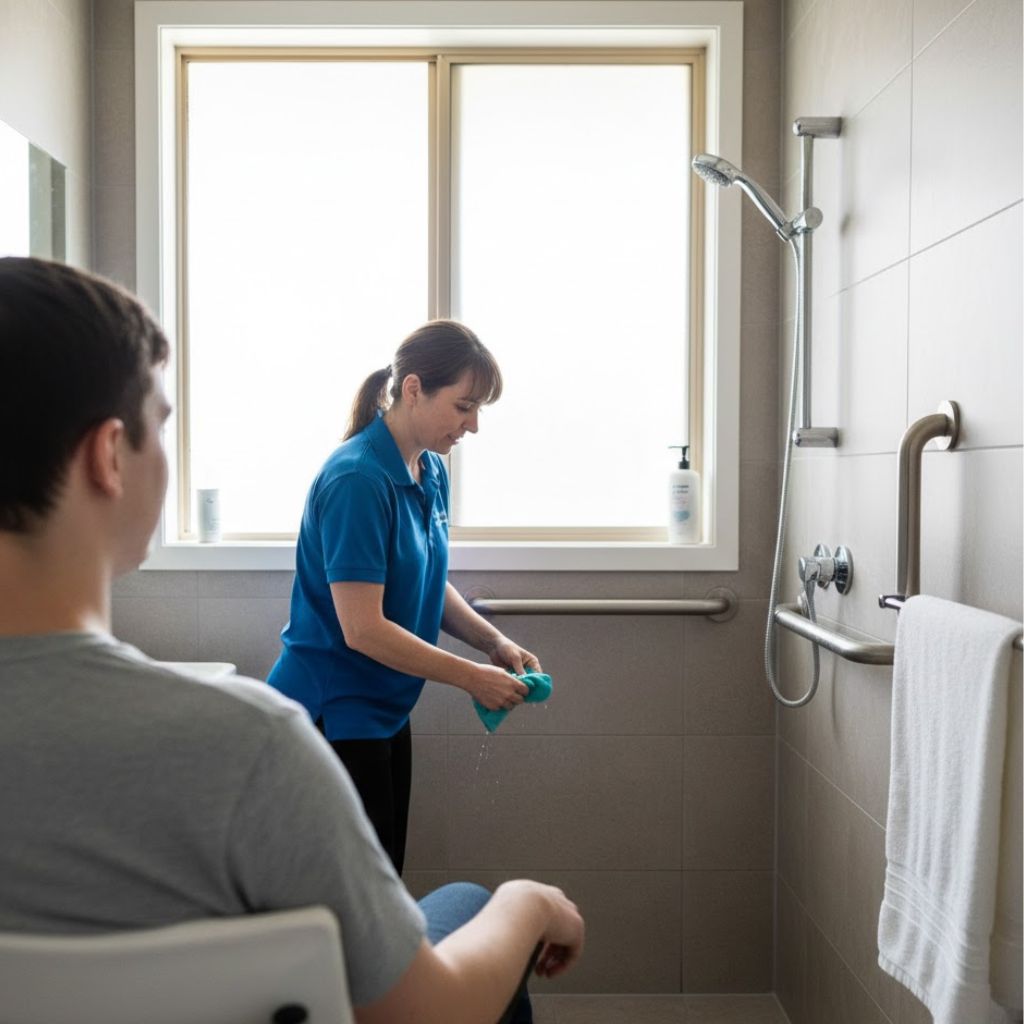
Starting personal care support can feel daunting, especially if you've always managed independently or only received help from family. It's natural to feel nervous about having someone assist with intimate tasks like showering, dressing, or toileting. Understanding what to expect helps reduce anxiety and sets you up for a positive experience.
This guide explains what personal care involves, your rights, how to prepare, and what a typical support visit looks like.
What Does Personal Care Include?
Personal care (also called "assistance with self-care activities") covers help with daily personal tasks you can't do independently due to your disability. This typically includes:
- Showering and bathing — help getting in/out of shower, washing, drying
- Dressing and undressing — choosing clothes, putting on/taking off garments, managing fastenings
- Toileting — assistance using the toilet, managing continence products, personal hygiene
- Grooming — hair care, teeth brushing, shaving, skincare, nail care
- Eating and drinking — assistance with meals if you have physical or cognitive barriers
- Mobility — help transferring from bed to wheelchair, moving around your home
- Medication prompts — reminders to take medication (not administering unless worker is qualified)
Your support worker only assists with tasks you genuinely need help with. If you can manage some aspects independently, workers support your independence by letting you do what you can.
Your Rights to Dignity and Privacy
Personal care must always respect your dignity and privacy. You have the right to:
- Be treated with respect regardless of your disability, age, gender, or background
- Have your privacy maintained — workers should knock before entering rooms, close doors during personal care, and only expose parts of your body that need assistance
- Choose whether you're more comfortable with male or female support workers
- Ask workers to leave whilst you complete tasks you can do independently
- Set boundaries about what you're comfortable with and what you're not
- Request a different worker if you're uncomfortable with your current worker
- Have a support person present during personal care if this makes you more comfortable
Never Accept Disrespectful Care
Personal care should never feel rushed, rough, or disrespectful. Workers should communicate what they're doing, respect your preferences, and maintain your dignity. If a worker makes you feel uncomfortable, unsafe, or disrespected, tell your provider immediately and request a different worker.
Preparing for Personal Care Support
Before Your First Visit
Your provider should arrange an initial meeting to discuss your needs, preferences, and routines before personal care begins. This is your opportunity to:
- Explain what assistance you need and what you can do independently
- Share your usual routines and preferences (preferred shower time, clothing choices, grooming preferences)
- Discuss any medical conditions, sensitivities, or communication needs the worker should know
- Ask about the worker's qualifications, experience, and background checks
- Express gender preferences for workers
- Set clear boundaries about what you're comfortable with
Practical Preparation
Make your home ready for personal care visits:
- Ensure bathroom has non-slip mats, grab rails if needed, good lighting
- Keep personal care items organised and accessible (toiletries, towels, clean clothes)
- Have continence products readily available if needed
- Clear pathways for safe movement, especially if using mobility aids
- Keep emergency contact numbers visible
What a Typical Personal Care Visit Looks Like
Visits vary based on your needs, but here's a typical morning personal care routine:
- Worker arrives — knocks, greets you, confirms day's tasks
- Toileting assistance — helps you use toilet if needed, maintains privacy
- Showering — worker helps you into shower, assists with washing/drying as needed, respects your dignity throughout
- Dressing — helps you put on clothes you've chosen or helps you choose appropriate clothing
- Grooming — assists with hair, teeth, shaving, skincare per your preferences
- Breakfast assistance — if needed, helps prepare or eat breakfast
- Medication reminder — prompts you to take morning medications
- Documentation — worker notes completed tasks, any concerns, reports back to provider
The entire visit might take 1-2 hours depending on your needs and pace. Quality workers never rush you — personal care should be done at your comfortable pace.
Pro Tip
Consistency helps build trust and comfort. Where possible, request the same worker for personal care rather than rotating workers. Familiar workers understand your routines, preferences, and communication style, making personal care feel less invasive over time.
Communication and Feedback
Good personal care relies on clear communication. Don't hesitate to:
- Tell workers if something hurts or makes you uncomfortable
- Correct workers if they're doing something differently than you prefer
- Ask workers to slow down if they're rushing
- Request they do things in a specific order that works for you
- Give positive feedback when workers do things well
If issues persist despite feedback, speak with your provider's coordinator. Quality providers want to know about problems and will work to fix them.
Choosing Your Support Workers
You have the right to request specific workers or decline workers you're not comfortable with. When choosing personal care workers, consider:
- Gender preferences — many participants prefer same-gender workers for intimate personal care
- Experience with your disability type — workers familiar with your specific needs often provide better support
- Communication style — personality matters for intimate support relationships
- Reliability — consistent, punctual workers reduce stress
- Qualifications — workers should have Certificate III in Individual Support or equivalent
Read our guide on choosing NDIS providers for more detailed selection criteria.
Need Respectful Personal Care Support?
Life Assist Abilities Support provides dignified, professional personal care across Canberra with experienced, screened workers.
Get in TouchFrequently Asked Questions
What tasks does personal care include?
Personal care includes showering, bathing, dressing, toileting, grooming, eating assistance, mobility support, and medication reminders. It covers assistance with daily self-care activities you can't do independently due to your disability.
Can I choose my support worker?
Yes. You can request specific workers and decline workers you're uncomfortable with. Many participants prefer consistent workers for personal care rather than rotating staff. You can also specify gender preferences for intimate personal care.
How do I maintain dignity during personal care?
Quality workers maintain your dignity by only exposing parts of your body that need assistance, communicating what they're doing, respecting your privacy, working at your pace, and following your preferences. You have the right to set boundaries and request different workers if dignity isn't respected.
What if I'm not comfortable with my support worker?
Contact your provider immediately and request a different worker. You don't need to justify your discomfort. Providers should accommodate worker preferences for personal care given its intimate nature. If the provider doesn't respond appropriately, consider switching to a different provider.
Do support workers need special training for personal care?
Yes. Personal care workers should hold at least a Certificate III in Individual Support or equivalent qualification. They should also complete NDIS Worker Screening Checks, hold current First Aid certificates, and receive training in manual handling, infection control, and dignity of risk.