
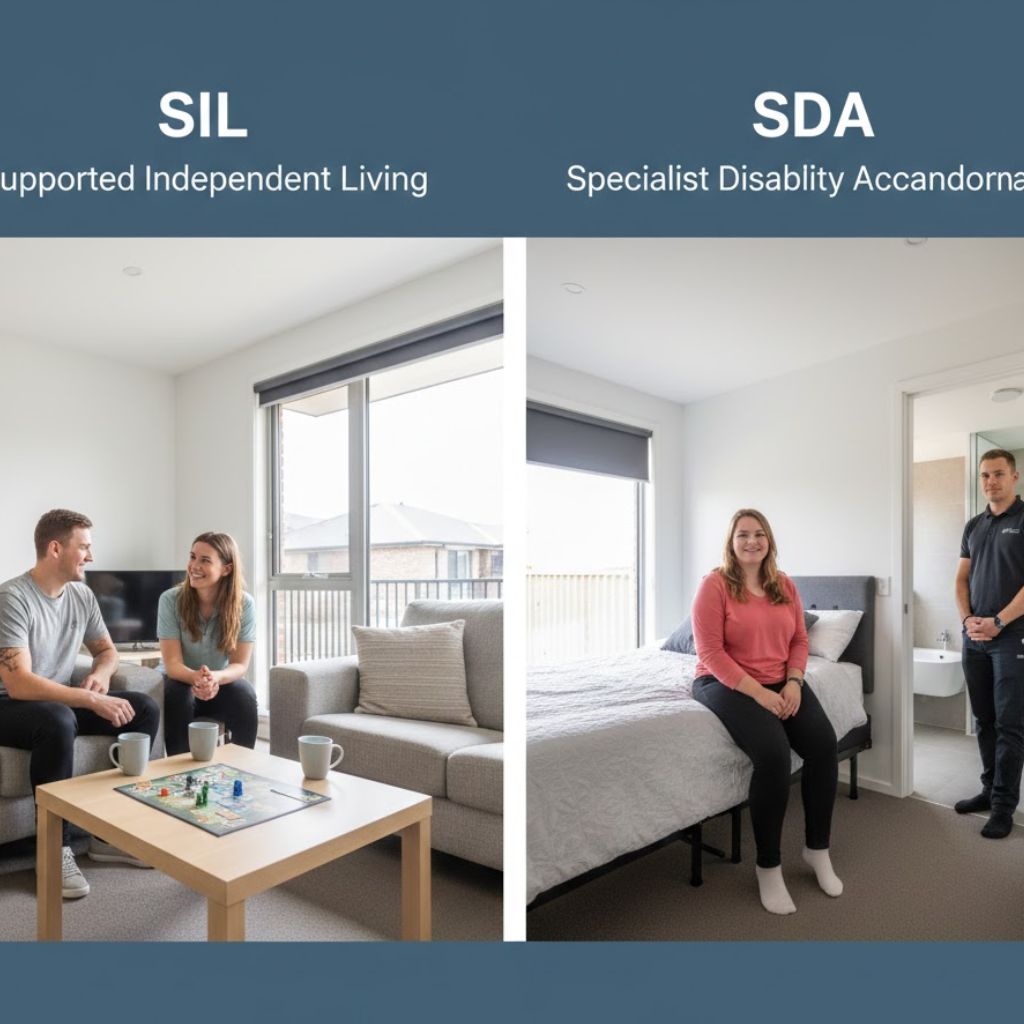
SIL and SDA are among the most confused NDIS terms. Many participants and families use them interchangeably or believe they're the same thing. They're not. Understanding the distinction is crucial because funding, eligibility, and how you access each differ significantly. This guide clarifies exactly what each funds and how they relate.
SIL — Supported Independent Living
Supported Independent Living funds the supports and assistance you need to live as independently as possible. This means funding for support workers who help with daily tasks like personal care, meal preparation, medication management, cleaning, and community access. SIL is about the people who support you, not the building you live in.
SIL funding sits in Core Supports under Assistance with Daily Life. It's relatively common — many participants with higher support needs receive SIL funding. You can use SIL in various living arrangements: your own home, a shared house with other participants, living with family whilst receiving external support workers, or specialist accommodation. The setting doesn't matter — SIL funds the supports wherever you live.
SDA — Specialist Disability Accommodation
Specialist Disability Accommodation funds the building costs for specially designed housing. SDA properties include features like ceiling hoists, accessible bathrooms with tracking systems, wider doorways for wheelchair access, emergency backup power, specialised ventilation or climate control, or advanced assistive technology infrastructure. These features meet needs that standard housing cannot accommodate.
SDA is Capital funding, not Core Supports. It's very rare — only about 6% of NDIS participants qualify. Eligibility requires extreme functional impairment or very high support needs that cannot be reasonably met in standard housing. Simply wanting purpose-built accessible housing doesn't qualify you — you must require the specialised design features for your safety and care.
Key Distinction
SIL pays for support workers helping you. SDA pays for the specialised building you live in. You might have SIL without SDA (support workers in your standard rental). You might have SDA without SIL (living independently in accessible housing with no daily support workers). Many people with very high needs have both.
How They Work Together
Participants with very high needs often receive both SIL and SDA. The SDA funds the specialised property designed for their physical needs — ceiling hoists, accessible bathrooms, wider spaces for mobility equipment. The SIL funds support workers who provide personal care, medication management, and daily living assistance within that property.
Think of it like this: SDA is the venue, SIL is the service. A wheelchair user might need SDA because standard housing lacks appropriate access features. They might also need SIL because they require personal care assistance. The SDA provides the accessible building, the SIL provides the support workers delivering care within that building.
SIL Without SDA
Most people receiving SIL live in standard housing, not specialist disability accommodation. They might rent privately, live in social housing, or own their home. Support workers funded through SIL visit at scheduled times to provide assistance. The housing itself doesn't have specialised features — it's regular accommodation where supports are delivered.
This is the most common arrangement. Participants need daily support but don't require the extreme modifications that SDA provides. Standard accessible housing with some minor modifications (grab rails, ramps) meets their needs.
SDA Without SIL
Some participants need specialised housing features but live quite independently with minimal support. They might have SDA funding for an accessible property with ceiling hoists and accessible bathroom but only receive occasional allied health therapy, not daily SIL supports. They can manage daily tasks independently once in appropriate housing.
This scenario is less common but demonstrates that SDA and SIL serve different purposes. The building provides physical accessibility; whether you need daily support workers is a separate question.
Eligibility Differences
SIL eligibility requires demonstrating you need daily support with personal care, daily living tasks, or community access beyond what family can sustainably provide. Assessment focuses on functional capacity and support needs. Many participants qualify.
SDA eligibility is far more stringent. You must have extreme functional impairment or very high support needs, require specialised building design not available in standard housing, demonstrate SDA represents value for money compared to alternatives, and show standard housing cannot reasonably meet your needs even with modifications. Very few participants meet these strict criteria.
How to Access Each
To access SIL, discuss needs during planning meetings, provide evidence from therapists about support requirements, demonstrate current informal supports are unsustainable, and explain how SIL helps achieve independence goals. SIL often appears in initial plans if needs are evident.
To access SDA, you need comprehensive assessments from occupational therapists and other specialists, evidence that standard housing cannot meet needs, quotes and planning for SDA properties, and demonstrated eligibility under strict criteria. SDA applications involve substantial documentation and often require multiple assessments.
Need SIL Supports in Canberra?
Life Assist Abilities Support provides Supported Independent Living across the ACT region.
Get in TouchFrequently Asked Questions
Can I have SDA without SIL?
Yes. If you need specialised accessible housing features but live quite independently without daily support workers, you might receive SDA funding without SIL. However, this combination is less common than having both or having only SIL.
If I have SIL, will I automatically get SDA?
No. SIL and SDA have completely separate eligibility criteria. SIL is relatively common; SDA is very rare and requires extreme functional impairment. Having SIL doesn't automatically qualify you for SDA — you must separately demonstrate why standard housing cannot meet your needs.
Who pays rent if I live in SDA?
You pay rent from your own income (Disability Support Pension, wages, or family contribution). SDA funding pays the provider for the specialised building features, not your rent. Rent is determined by the SDA provider and your agreement with them.
Can I choose who provides my SIL if I live in SDA?
Yes. Your SIL provider and SDA provider are usually separate organisations. You choose your SIL provider independently. However, some SDA properties require specific SIL arrangements for safety or operational reasons — clarify this before moving in.
What if I need SDA but don't qualify?
Explore alternatives like standard accessible housing with modifications (funded through home modifications in your plan), private rental properties with accessibility features, social housing with accessible options, or living with family with appropriate modifications. Many participants successfully live in standard accessible housing without needing SDA.