Community participation is more than just getting out of the house — it's fundamental to wellbeing, social connection, skill development, and quality of life. Yet many NDIS participants underutilise their community participation funding, missing opportunities that could significantly enhance their lives.
This guide explains why community participation matters, what the evidence shows, and how to make the most of this crucial support.
Why Community Participation is Essential
Humans are social creatures. We need connection, purpose, and engagement with the world around us. For people with disability, barriers to community access can lead to isolation, which research consistently links to poor mental and physical health outcomes.
Community participation addresses this by:
- Reducing social isolation — regular community engagement prevents loneliness and builds social networks
- Improving mental health — participation in activities reduces depression and anxiety whilst boosting mood and self-esteem
- Building skills and confidence — trying new activities develops capabilities and proves what's possible
- Creating routine and structure — regular activities provide purpose and meaningful ways to spend time
- Fostering independence — community access with support can build toward greater independence over time
- Enhancing physical health — active participation keeps people moving, improving fitness and overall health
The Evidence: What Research Shows
Substantial research demonstrates that community participation significantly impacts wellbeing for people with disability:
Studies show that people with disability who regularly participate in community activities report higher life satisfaction, better mental health, and stronger social networks compared to those who remain isolated at home. Community participation is associated with reduced depression and anxiety, improved self-esteem, and better physical health outcomes.
The social model of disability recognises that barriers to participation — not disability itself — create disadvantage. When supports enable community access, participants can engage in the same activities as everyone else, reducing the disabling effects of barriers.
Community Participation vs Social Isolation
Social isolation isn't just loneliness — it's a serious health risk comparable to smoking 15 cigarettes daily. Regular community participation acts as a powerful protective factor against isolation's negative effects on mental and physical health.
Types of Community Participation Activities
Community participation encompasses a wide range of activities. The key is finding what interests you:
Recreation and Leisure
- Sports and fitness activities — swimming, gym, adaptive sports
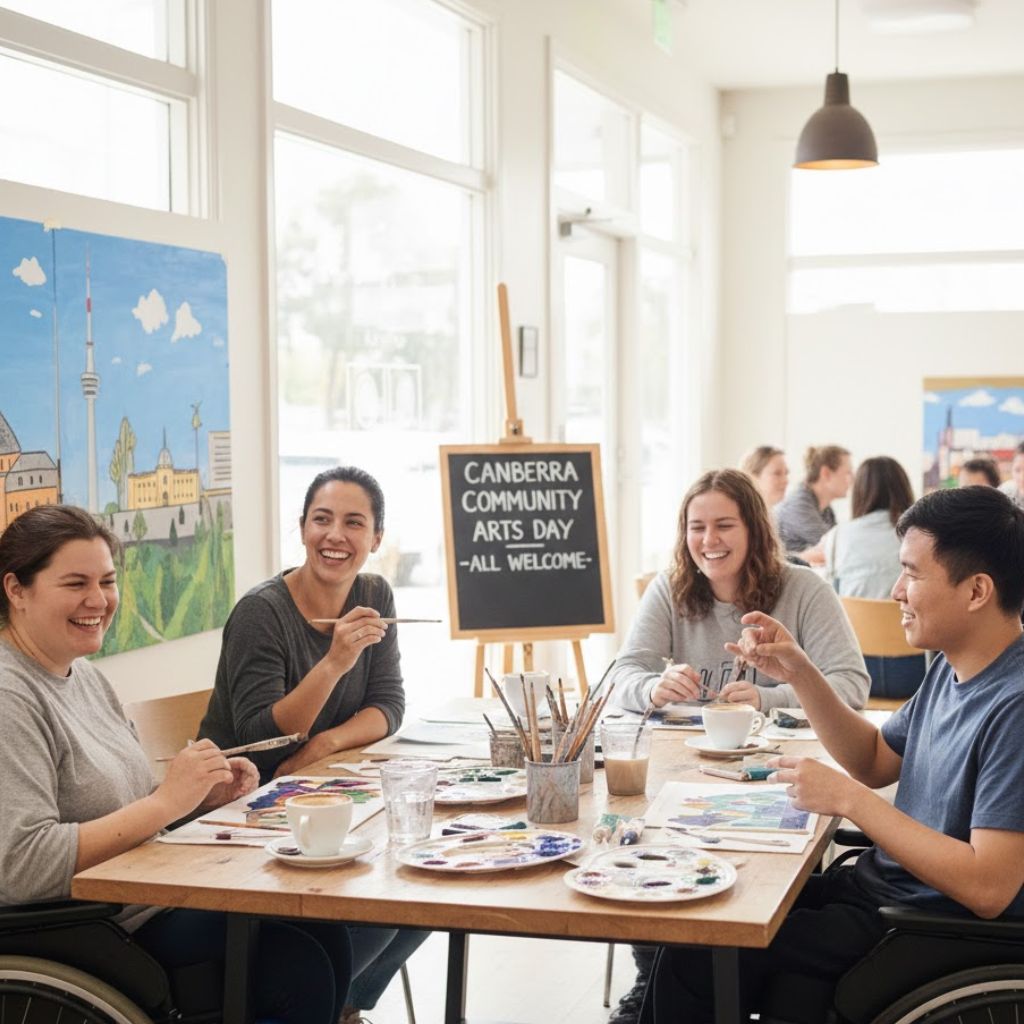
- Arts and crafts — painting, pottery, music, drama
- Hobbies and interests — gardening, cooking classes, photography
- Entertainment — cinemas, concerts, museums, galleries
Social Connection
- Community groups and clubs aligned with your interests
- Social groups specifically for people with disability
- Volunteering opportunities that give back to community
- Cafes, restaurants, and social outings with peers
Education and Development
- Workshops and classes — computers, languages, skills training
- Library programmes and book clubs
- Educational excursions to places of interest
- Peer mentoring and skill-sharing groups
Community Events
- Local festivals and markets
- Seasonal celebrations and cultural events
- Community gatherings and neighbourhood activities
- Sporting events as spectators
Community Participation in Canberra
Canberra offers excellent community participation opportunities for NDIS participants:
- National institutions — museums, galleries, and cultural sites with accessibility programmes
- Parks and nature — accessible walking tracks, picnic areas, Floriade, national parks
- Sporting venues — accessible facilities for various adaptive sports
- Community centres — libraries, neighbourhood centres with inclusive activities
- Markets — farmers markets, craft markets, cultural festivals
- Cafes and restaurants — diverse accessible dining options across all suburbs
- Events — Enlighten Festival, Canberra Show, National Multicultural Festival
Many Canberra venues have made significant accessibility improvements, making participation easier than ever.
Making Community Participation Work for You
Start with Your Interests
The best community participation aligns with your genuine interests. Don't just do activities because they're available — choose things you'll actually enjoy. If you love animals, visit wildlife sanctuaries or volunteer at animal shelters. If you enjoy art, explore galleries and take art classes. Passion drives sustained participation.
Balance Individual and Group Activities
Group activities with shared support ratios (1:2 or 1:3) stretch funding further than individual 1:1 support. However, some activities suit individual support better, especially when building confidence or requiring intensive assistance. A mix of both typically works best.
Build Gradually
If you're unused to community participation, start small. A weekly cafe visit or short activity builds confidence before attempting longer outings or more complex social situations. Gradually increase frequency and complexity as comfort grows.
Work Toward Independence
While Capacity Building supports fund skill development, community participation can also build toward greater independence. Support workers can coach you through activities with the goal of eventually managing them independently or with less support.
Pro Tip
Plan community participation across your entire plan period. Regular weekly activities provide more consistent benefit than sporadic outings. Budget monthly funding allocations to ensure participation throughout your plan, not just at the beginning.
Funding Community Participation
Community participation is funded under Core Supports — Assistance with Social and Community Participation. This covers:
- Support worker wages whilst attending activities with you
- Transport to and from activities (if not funded separately under Transport)
What community participation funding doesn't cover:
- Entry fees, memberships, or tickets (these come from your own money)
- Food and drinks during activities
- Materials or equipment for activities
Some participants use personal funds for entry costs whilst NDIS covers support worker time. Others negotiate inclusive packages where providers arrange group activities with entry included in the hourly rate.
Ready to Start Community Participation?
Life Assist Abilities Support offers diverse community participation activities across Canberra tailored to your interests.
Get in TouchFrequently Asked Questions
Why is community participation important for people with disability?
Community participation reduces social isolation, improves mental health, builds skills and confidence, creates routine and purpose, fosters independence, and enhances physical health. Research shows regular community engagement significantly improves wellbeing and life satisfaction for people with disability.
What activities count as community participation?
Any community activity counts — sports, arts, hobbies, entertainment, social outings, volunteering, education, cultural events, dining out, shopping, or visiting attractions. The key is activities that get you into the community engaging with others and pursuing your interests.
Can I do community participation on my own or with family?
Yes, but NDIS only funds support worker assistance. If you can do activities independently or with family help, that's great — but NDIS community participation funding specifically covers paid support workers accompanying you to activities you can't access independently.
How much does community participation support cost?
Support worker rates vary based on day/time and support ratio. Group activities (1:2 or 1:3 ratios) cost less per person than individual 1:1 support. Check the NDIS Price Guide for current hourly rates. Your funding covers support worker time — activity costs come from personal funds.
What community activities are available in Canberra?
Canberra offers museums, galleries, parks, sports facilities, community centres, markets, festivals, cafes, cinemas, libraries, nature reserves, adaptive sports programmes, art classes, and accessible events throughout the year. Many providers organise both individual and group activities across diverse interests.